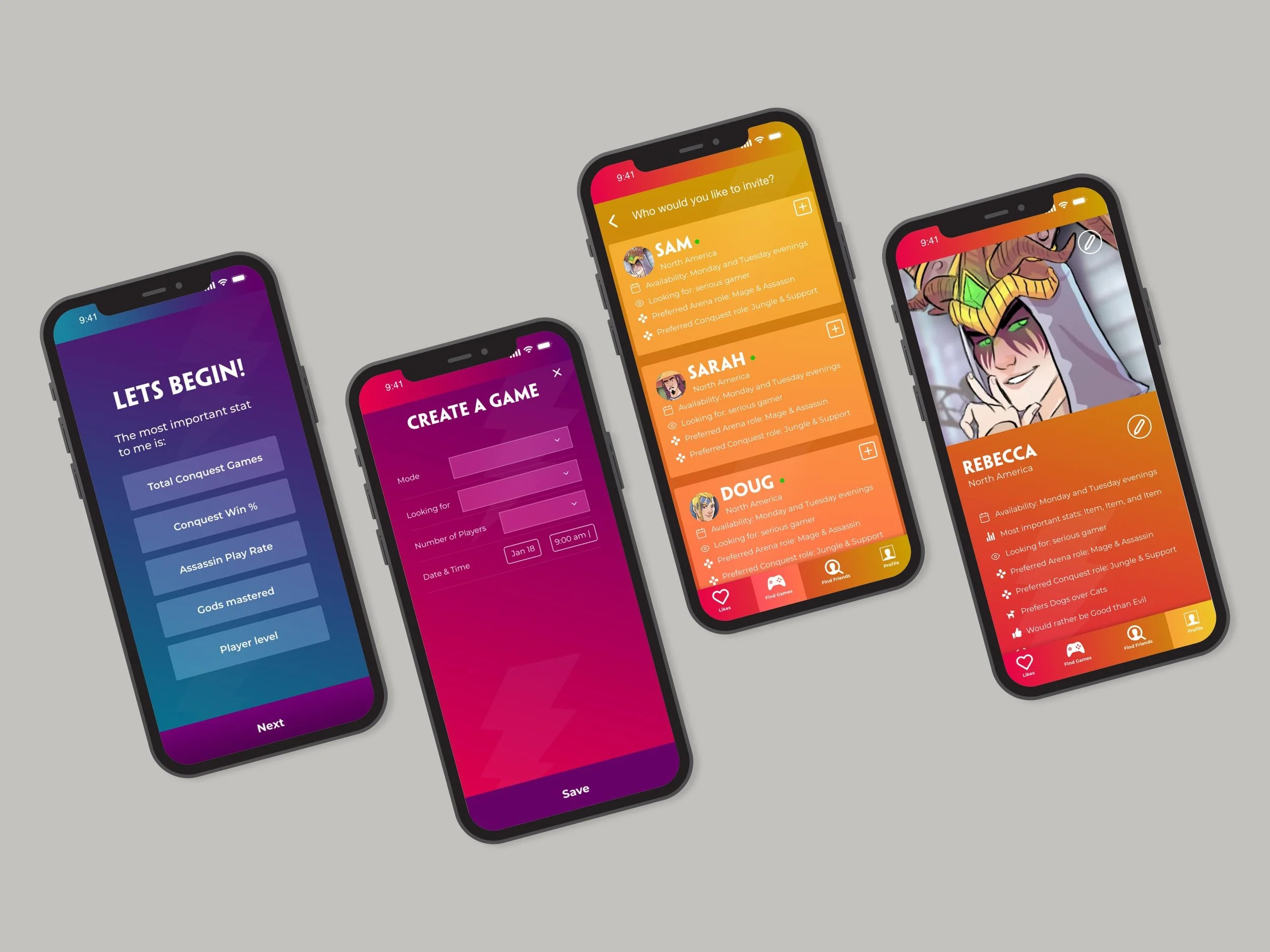
-
Hi-Rez Studios
-
Finding the right gamers to join your team can feel chaotic, slow, and wildly hit-or-miss. The challenge was to create a companion app that made team formation more intentional by matching players around compatibility, team needs, and play style, all within an experience that felt playful, clear, and native to the gaming world.
-
Product concept
user flow mapping
UX strategy
interactive prototype
visual interface design
-
Led the product concept, UX research, interaction design, flow architecture, and prototype development for the experience
-
UX Research
UX Strategy
User Flows
Information Architecture
Wireframing
Interactive Prototyping
UI Design
Mobile App Design
designing an app for gamers
This concept reimagined team formation for competitive gamers through a playful, swipe-inspired companion app built around compatibility, team needs, and player preferences. The challenge was to create an experience that felt socially intuitive and culturally fluent, while solving a real usability problem: making it easier for players to find the right teammates without the usual chaos, guesswork, or lobby roulette.
Players could build detailed profiles around strengths, preferred roles, and ideal team dynamics, then use the app to browse matches, join existing games, or host their own. The product structure was designed to cut through the usual friction of multiplayer coordination and make team-building feel faster, clearer, and a lot less like yelling into the void.
The project began with research into gamer behavior, social dynamics, and the interaction patterns that make matching platforms feel instantly legible. Those insights were translated into mood boards and experience principles that shaped the product’s tone, interaction model, and overall interface direction.
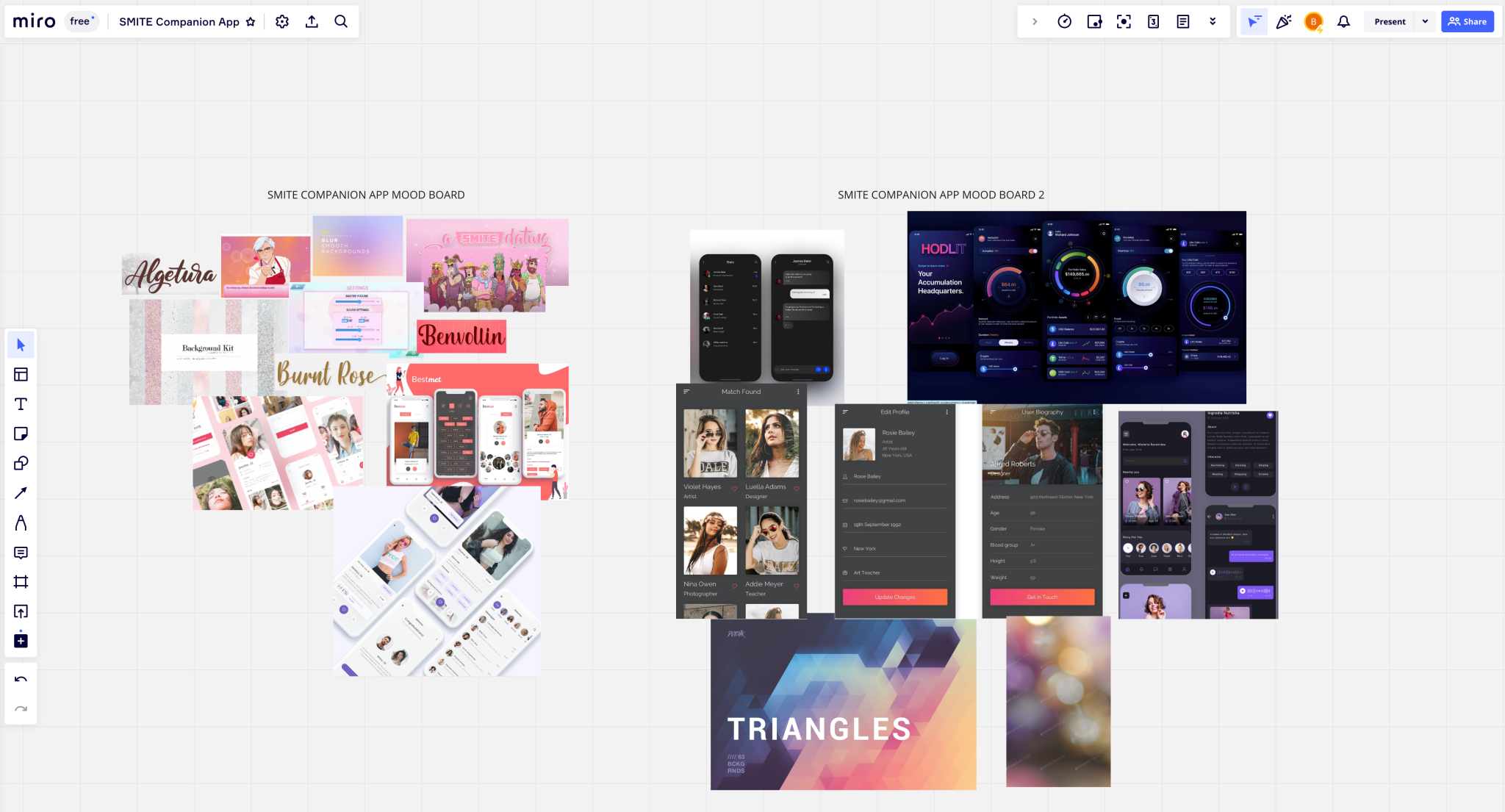
Project Moodboard
To translate early research into a clear visual direction, I developed mood boards that explored gaming culture, social matching patterns, and interface inspiration. This step helped define the product’s tonal range and aesthetic foundation before moving into user flows and high-fidelity prototyping.
The exercise created early alignment around the experience’s personality, ensuring the visual direction supported both usability and brand tone.
User Flow Map
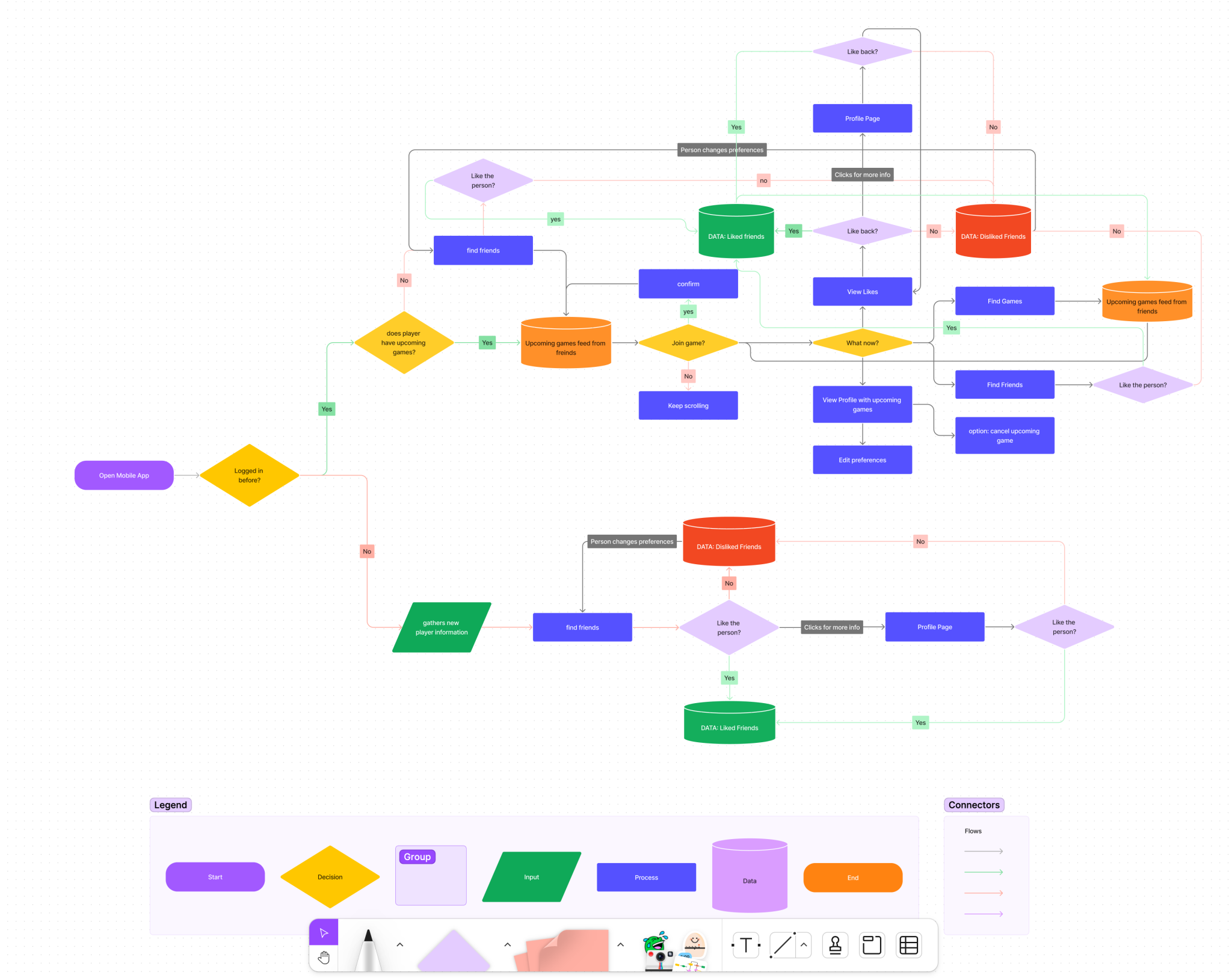
To turn those insights into a usable product structure, I mapped a comprehensive user flow in FigJam covering onboarding, profile matching, game discovery, and preference management. This became a strategic alignment tool, helping surface edge cases, clarify logic, and get stakeholders on the same page before high-fidelity design began.
Presenting the flow early helped reduce ambiguity, support cleaner decision-making, and make the move into prototyping far more efficient.
Low fidelity Prototype development
With the flow established, I developed a low-fidelity interactive prototype to test core mechanics, validate decision pathways, and refine interaction patterns. While the prototype used a system-imposed font rather than the one I would have preferred visually, the work still served its real purpose well: proving the product logic, clarifying usability, and creating a strong bridge between concept and execution.

High fidelity Prototype development
Through iterative feedback with stakeholders and developers, I refined the experience to improve usability, sharpen interaction clarity, and better prioritize features. From there, I moved into final UX design, shaping an interface that balanced playful energy with intuitive navigation, clear hierarchy, and functional ease.
Below is a walkthrough of the final prototype, showing the end-to-end experience from onboarding through match confirmation and game scheduling.
Outcome
I was able to translate behavioral insight into product structure, align stakeholders around a clear interaction model, and design an experience where brand tone and usability work together instead of competing for attention.
This project shows how familiar interaction models can be reinterpreted to solve entirely different product problems. By borrowing the logic of social matching and adapting it for competitive gaming, I created a concept that reduced friction in team formation while reinforcing a distinct, playful product personality. The result was a research-informed experience shaped by clear product thinking, strong interaction logic, and iterative validation.